Showing posts with label Best Practices. Show all posts

Saturday, November 1, 2014

Lessons from a Cardboard Challenge

Maze Prototype - this group went on to time students and track record on the big day!

Bowling Prototype - this group went on to craft a bowling game large enough for one person to sit inside and return bowling balls

Ring Toss Prototype - This group went on to build a very large ring toss game. It was great to see the way the worked through deciding the best tossing distance for their primary and intermediate peers. 
Ball Toss Protoype - In their arcade model this group fashioned a ball catch/ return shoot in behind their game. Fanstastic work!


Global...Cardboard...Challenge! It's amazing the excitement that can be generated by three words on your class calendar. The excitement only grew as the day approached. Its now been about two weeks since the event, and the lessons learned are still fresh on our minds. The excitement over its success has not faded*.

I've really enjoyed hearing the way students reflected the build up: the launch, meeting Caine (through his YouTube videos), the ideation process, prototyping, these aspects of the process have been cited again and again by students as significant points in their learning journey. One student even described the commotion at the cardboard pile as something from "The Hunger Games". I smiled and cringed all at the same time!

Teamwork. It's truly a pleasure hearing students describe the joy they found in working with a classmate - and they didn't even get to choose which one ;) One group that stands out in my
mind too is a pair that struggled to see eye to eye. We weren't sure the duo would last until the main event, but in our last afternoon of building, when the pressure was really on, they made it happen. Decisions were made, tasks were accomplished, and laughs were shared as they tested their final product!

Craftsmanship. I think the lessons learned are evident in student's ideas about where they could go next. Many students discussed strength and stability as lacking in their initial structures, but they weren't at all defeated by these challenges. Repairs on the day of our event were minor - almost every group had accurately gauged the strength that would be required to sustain hours of play; and furthermore, students finished wanting to take on bigger more elaborate building challenges. Fantastic!

*I am still being approached by parents who speak of what this challenge inspired in their kids. The number of cardboard creations in our community has risen exponentially ;)

Monday, June 9, 2014

Year End Presentation of Learning

Its the end of the 2013/2014 school year and our students are excited to be putting together "Presentations of Learning". We've asked that they use the three "Core Competencies" in BCs draft curriculum to anchor their presentations and tell stories of their learning with respect to these three competencies. Here's my own Presentation of Learning.


Artifacts and Examples Shared:

Thursday, April 17, 2014

Learning Together: Feedback and Critique

As I grow and learn with PBL my assessment practices evolve too. I was excited to share my learning at a recent regional Professional Development conference. Here are the slides from that presentation:


For me one of the biggest take-aways as I've pushed to blend good assessment practices with PBL as that strong peer assessment allows us to really "activate learners as resources for one another" (an idea Dylan Wiliam really got me thinking about). If students are getting deep with their questions to their peers then they can really push one another's thinking. How powerful is that!

The second big lesson in PBL based assessment, and really throughout classroom teaching, is that structure and routine are so important. The assessment based application of that in my classroom is critique protocols like this one from BIE. We actually distinguish between "clarifying" and "probing" questions in that clarifying is for us the audience, and probing is to push the thinking of the presenter. Questions first, before giving feedback is so key here in that it forces us to really consider the presenter and their dilemma and try our best to help them on their way with our feedback. Our tendency is to want to jump in with feedback and comments, but its so much more valuable to listen, clarify, and probe before we get thinking about feedback.


Its been great learning about feedback and critique with my students, and its helping our learning very step of the way. What forms of assessment are you using in your classroom? How do you vary your assessment practices with different tasks? What does assessment look like when there are different products being created by different groups or individuals?

Thursday, April 10, 2014

Reflections on the Google Summit -with a focus on Collaboration

http://www.digitaltrends.com/wp-content/uploads/2011/07/url3-e1309971764582.jpg
Google, Google, Google. I keep coming back to this post and there really is so much to talk about. I've thoroughly enjoyed my ongoing exploration of the Google environment both personally and with my students. I recently had the privilege of attending a Google Summit in February which was the real motivation to try to summarize and share my learning with respect to Google. The summit was a very cool experience. Our two days there were packed full of workshops (I'd totally recommend checking out these copies of crowdsourced notes [link] [link] they include notes on almost all the sessions at the conference), The days were also bracketed with keynote speakers and rapid-fire 3 minute "demo slam" style presentation series (a concept I'd love to see become part of District ProD). The number of tools and tricks being presented was incredible. Initially I found myself asking for more why. Why use these tools? Why change? I didn't see a big focus on this question. What we did see was a major emphasis on the SAMR model. Now, as I look at the tools I've integrated into my practice and the tool I'm interested in exploring its starting to make more sense. Its really only once Technology becomes embedded into our practice that we realize its full potential. Once technology is embedded we begin to realize just how much its enriching our learning and the learning of those we're working with. The SAMR model forces us to question the benefit of technology in our practice. 

I've experienced the enrichment that comes from the Google environment in profound ways recently. As students have moved to Google Docs and Google Drive they have stopped loosing assignments. Imagine that - all of a student's work accessible all the time. That's a game changer. Documents have become collaborative and living. No longer do I share files, I share links. Not only can we all see the same document at the same time, or see the most recent version of a document all the time, but we can now begin to have a running dialog about the work in the work. The document itself has embedded within it a story of sharing, commenting, feedback, revision, collaboration, and learning. Search has also become the best way to find everything, and not just in a search engine. I used to pride myself on sweet file organization, but that whole way of thinking is quickly being replaced by search. Talk of keywords is commonplace in my classroom, and in some cases advanced searches are becoming the norm and not the exception - CC image searches come to mind. 

I could go on, but I think we'll agree its a rich experience to reach grow with a tool to the point of redefining the way you do learning. I want to share some of the tools and features that I've been using or would like to use more that I wanted to highlight. I'd love to hear about some of the tools you are using and enjoying too! I'll also recommend checking out the reflections of one of my colleagues, Nicole Emmerton here on her blog

Google Docs - a collaborative office suite
(https://www.google.com/drive/?authuser=0)
So much I could say about Google Docs, here are some of the things I've really begun to appreciate:
  • 3 layers of privacy for docs - private (only visible to people whose email addresses have been entered), anyone with the link can access, public; and within each layer there are options as to whether individuals other then the owner can view, comment on, or edit the doc. (https://support.google.com/drive/answer/2494822?hl=en)
  • revision history as a way to keep teams accountable - see who made what changes and when (revision history overview: https://support.google.com/drive/answer/190843?hl=en)
  • simultaneous participation in classroom discussion 
  • More and more features added in: research and citation tools within the doc, image searches within the doc (http://youtu.be/NGtWyifMX_k), add-ins for publisher type formatting, add-ins for smart art type graphics, build in dictionary, and optional extensions for text to speech within a chrome browser
  • Commenting feature in Docs
    • Personally I would consider the comments I make and dialogue I have about student work to be the most valuable part of my assessment practice - at least as far as Teacher assessment goes. Its even better when students give feedback and have conversation with their peers - a practice I`ve been working to tune this year too. 
Google plus - Google's answer to Facebook
There are lots of cool features of Google plus, and its growing rapidly as a result. Here are some of my interests:
  • Google handouts - a Skype-style video conference with the key difference being that you can have a conference with multiple participants for free, and Hangouts give you the ability to: stream the hangout online, save the hangout to a YouTube channel, share your desktop, share docs within the hangout, and share YouTube playlists within the hangout. Not to mention the creation of an "event" is pretty slick in that it will automatically send reminder emails to everyone involved.
  • Blogger has an option to post blog posts to G+
  • MOOCs - I've not lurked and participated in a few Massive Open Online Courses offered through Google plus, and there are many being offered (for example the Deeper Learning MOOC)
  • Google Virtual Field Trips - using Google Hangouts
Personal Learning Networks and back channel conversations
Throughout the conference I throughout enjoyed the ongoing dialog with other educators through social media tools
  • Twitter continues to be my favorite source of ongoing ProD and I can't recommend it enough. A personal highlight at conferences has become meeting colleagues whom I have go to know over Twitter. 
  • Today's meet is a free, easy to set up tool that allows a user to set up a public chat. Guests are given a link, asked to greet the chat with their name, and then allowed to chat away 140 characters at a time. It was used in many of the workshops I attended and was an excellent way to engage a large audience - especially those that may not share publicly otherwise
Google Chrome Browser
To start off I now feel lost when I can't log into a Chrome Browser get that at-home feeling of having my browser set up for me. I'm a fan of Chrome and here are a few reasons why. One of the workshops highlighted a bunch of Chrome features if you're interested check out the notes.
YouTube Tricks and Tips
And lastly, some of things worth exploring on YouTube
Whew, thanks for taking a look. What are some Google Tools you've really enjoyed in your class? In your own practice?

Comments are always welcome!

Tuesday, November 19, 2013

PBL Learning Team

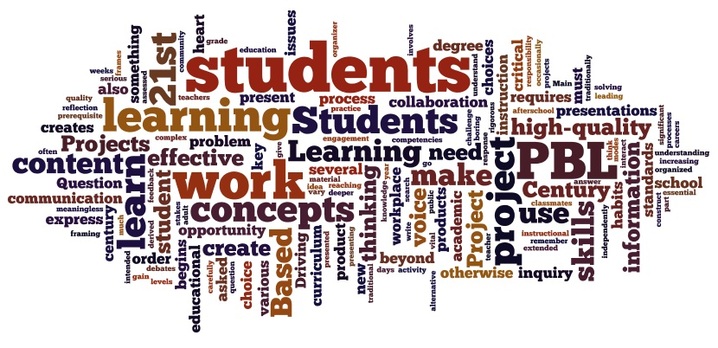
Wordle: Questions about Project Based Learning


A group of Teachers met today at Kelly Road to discuss Project Based Learning. We've ordered BIE's PBL Starter Kit as a resources and will be working through that together as a way to inform and evaluate our practice. We've also started a blog dedicated exclusively to the group. Its online here

One of the things we did was share our questions. Here's what we came up with:

  • What questions do we have?
    • How does PBL work?
    • How does PBL benefit our students?
      • motivation
      • engagement
      • success
      • building core competencies (thinking, communicating, personal and social competency)
      • Definition of “The Educated Citizen” (we heard this recently and understand its in the BC school regulations, but do not know where)
        • literacy and numeracy foundations
        • understanding rich content
        • core competencies
    • How do we cover curriculum through PBL?
    • What is “true PBL”, is there “true PBL”?
    • How much information is required before students jump in?
    • How much Teacher Direction/ Guidance is needed?
      • How do we facilitate and let students drive?
      • What role do driving questions play?
      • How do we come up with really good driving questions?
      • What skills and experiences do students bring to projects?
    • How do different disciplines come together in projects?

We agreed its the highlighted questions that matter most. Its the difference this way of learning makes in the lives of our students that matters most. We want to be intentional about evaluating our practice based on the difference it makes for students. We are excited to be learning together!

What questions do you have about PBL?

cross posted at: http://sd57learning.blogspot.ca/

Saturday, October 26, 2013

Talk of Change - Embracing Project Based Learning

change_thoughts by MMcDonough
change_thoughts, a photo by MMcDonough on Flickr.


I gave my first Professional Development workshop yesterday on Project Based Learning (PBL). While I've talked to Colleagues, Parents, and Community members about PBL, this was my first chance to have a deeper, focused dialoug with educators about PBL. 

I was very cognizant in putting it together that I wanted to create opportunities for rich conversations and sharing of ideas, activities, and strategies. I borrowed and adapted questions from David Truss's presentation "7 Ways to Transform Your Classroom". The questions participants discussed together and shared thoughts on were a powerful part of the day, in my opinion. 

Selling anything, though, is not easy. As George Couros points out, we need to be strategic if we want to help others embrace change. George poses three questions that we can answer for Educators as we present change. Let me share my thoughts on them as it relates to PBL:

  • How will this save me time?
    • Such a valuable question for Educators. I want to acknowledge that adopting and settling into new Teaching practices takes time and energy, we all know that. For me the investment pays off in the product, and we'll get to that in a minute. In my experience the payoff with PBL is in two places. First, I save time preparing discrete tasks. My projects are almost always chunked into pieces that stretch over 2-6 hours of class time. So, once students are engaged in a new activity we roll with it for a few days, allowing me to do much more guiding, facilitating, informal breakout workshops, and formative assessment. Secondly, I save time in assessment. PBL lends itself beautifully to AFL practices that look a lot like students developing ownership by understanding where they are at and where they are going in their learning. This requires coaching and practice, but does not require that I collect small pieces of work daily, or even every few days to document the small steps in their learning journey. I should say to that my context is also a BYOD program. This saves a huge amount of time for me photocopying discrete tasks. I've moved my project outlines to Google Drive so students have current (and ever-changing) copies shared with them and they can be set up to comment on the outline or even edit as needed. 
  • We need to focus on different, not more
    • Yes. Some of the shifts I've been cognizant of in my practice as it related to PBL are in the ways I synthesize and summarize information, share resources, and share my expertise. As I move to PBL I fully desire to shift my instructional methods from Teacher centered to Learner centered. It strikes me as odd that so often we stand up and synthesize and summarize content for students. We need to teach students to synthesize and summarize content. If we are too worried about covering the content to let the students summarize it for themselves then perhaps we are trying to cover too much content (and I don't mean to get too involved in the debate over covering content here, I am more interesting in suggesting that this is one way that PBL is different and not more). My argument on resources is very much the same. Students need to be able to effectively find and critically curate content online. We are doing them a disservice if we find it for them, and we are doing them an even greater disservice if we do not teach our students to use a variety of resources. So we shift from finding and curating and sharing resources for our students to having them find, curate, and share their own resources. Lastly, PBL comes with a shift in expertise. Methods of Inquiry seek to involve community and experts outside the school. Although I'm not there yet in my practice, efforts to do this have been rewarding. I believe the same can be said about the learning community that exists within the classroom. Prensky writes about a Partnering pedagogy where we are all Teachers and we are all Learners. We need to shift our practice enough to allow students to embrace the roll as the experts that they are and are becoming.  
  • Is this better?
    • I believe so. In the presentation I respond to the "Why?" question with three arguments: because of shared experiences, because of shared findings, and because of shared understanding of best practice. There's a lot to unpack there, but I'll leave that to the presentation itself. After reading Couros's post the piece of this I feel I missed was the way in which its better for me. Ultimately I am most satisfied as a Teacher when the Learners I'm working with are most satisfied in their Learning. To that end, yes. PBL has allowed for deeper, richer, more meaning learning for my students and left me more satisfied in my Teaching!
Do you agree? What burning PBL questions are on your mind? Does PBL save you time? What shifts has it come with in your practice? Is it better for you and your students? What conversations are you interested in having as you consider change?

Monday, October 21, 2013

Logo Contest: Lessons from an early project


As one of our first few projects, and one with a focus on community building, we ran a logo contest early last year. We used the project to introduce and set up some Math content related to ratios, rates, and proportions (Math 8), as well as similar figures (Math 9). Science outcomes related to Scientific Literacy, and English outcomes related to Media awareness were also tied in through related assignments. The curricular ties were strong. As one of our first projects, though, this project stands our in my mind mostly because of what I learned from it.

One of the things I wish I had done differently with the project is to have started the logo design aspects sooner. Since then I've done a few design projects with a colleague who regularly runs with a two step research process for design work: first, a search for a variety of designs that students collect in a document; then, once a few favorite designs are chosen, a second search and collection takes place for a large number of designs related to the favorites from the first round. Drawing inspiration from other's logos would have given students an excellent springboard from which to begin sketching and drafting their logo designs.

The second aspect I learned from was the level of voice and choice in the technology used. We left students with options as to how they created their logos - we had everything from Google Sketch Up designs, Paint designs, Gimp designs, and Google Draw designs. Many students were exploring these drawing programs for the first time. Students were given ample drawing time, and were also given tutorial videos to better their understanding of Gimp. Because there was a range of new tools being used, though, students were not given quality feedback on their design work. In the end, however, the students with the greatest knowledge of the design tools produced the best logo.

The end product, as seen above, turned out really well. Of course, this wasn't the only product of the project. Students were motivated in the work, and enjoyed the process of pitching and voting on a logo. Math outcomes were tied in nicely to logo drafting, Science outcomes dovetailed into a "companies in the news" assignment, and English outcomes were met by a media assignment alongside the logo. As a community builder the project served its purpose well, and it was very cool to have the program represented by a piece of student work.

What were your take aways from your first experiences in Project Based Learning? Are there elements of the process you focused on early on? What kinds of projects or tasks would you use to introduce PBL in your classroom?

Sunday, October 20, 2013

Making Feedback an Event


What does feedback look like in your context? How has giving and accepting feedback been modeled in your experience?

Peer Feedback is a powerful classroom tool for a variety of reasons. It helps foster a collaborative culture, exposes students to varying ideas and perspectives, serves as a form of positive peer pressure, and gives students an opportunity to put their best foot forward as they prepare their work for feedback. I believe feedback can also be used to teach content, and I want to improve the way we do feedback in my classes so we can maximize its benefit for our learning.

In this case students had prepared sketches of the models they were planning on building and animating to bring mitosis or meiosis to life. The models will have a QR code attached linking to a video which will explain the model and bring it to life either visually or orally. Although many of the sketches were not fully developed I believe students benefited from thinking through their plan and creating their sketch as well as by looking at the plans and sketches of others.

What I really enjoyed about this round of feedback was that it was very much an event (and for my purposes an excellent form of formative assessment). Students were asked to come with their sketches. Sketches were then touched up to ensure that they were self explanatory to viewers who were circulating by for 3 minutes at a time. Students then added to their sketches notes to guide the feedback. They also added comments to let the viewer know what they liked about their work, what was tricky, and what they thought they might do differently (a suggestion from a student-parent in my PLN, thanks Greg). Feedback then proceeded in 3 minute rounds (a time chosen based one total time available, but it actually worked quite well). This countdown timer was used to add an edgy, funky, fun structure to the event. Students enjoyed it, and agreed that it was comfortable, beneficial, and improved their knowledge of the content.

As we continually seek to improve the quality of feedback one of Dylan William's suggestions (from "Embedded Formative Assessment") I've enjoyed is to collect the post-it feedback afterward and post is on the board. Students are then encouraged to look at all the feedback and vote on which pieces are most useful to the reader.

At the end of the day I want the feedback experience to be valuable enough that students come prepared, and participate to the best of their ability to their own benefit and the benefit of their classroom. So, how can we do feedback better?

Tuesday, October 8, 2013

Project Based Learning Workshop Plans and Questions

http://tgccapstone.weebly.com/uploads/9/6/5/6/9656824/1076132.jpg?719
I'm excited to be facilitating a Project Based Learning Workshop this month in the Robson Valley. Its been a fantastic process trying to distil my learning and beliefs about learning into a day's worth of activities and conversations for educators.

Here's the synopsis for the day:
Why PBL? What is PBL? How do we do PBL? Together we will explore these questions through  resources, examples, and the sharing of ideas and experiences. We will look at assessment strategies and learning activities that complement project based learning, and will collaboratively plan new projects and tweak existing ones.
And here's the link to the day plan.

How would you describe Project Based Learning? What do you feel are the most valuable lessons you've learned? What burning questions do you have as an educator as you look at new methods of instruction, learning activities, and new assessment practices? What resources have been most valuable for informing your practice (I've collected videos here and other goodies here)

I welcome your feedback!

Thursday, September 19, 2013

Why I Love Project Based Learning


We spent our first two weeks of the school year working on a Sundae Project. The project was a huge success on so many levels. I want to share why I found the project, and consistently find Project Based Learning so rich.

From the launch to the debrief students were engaged in this project. We introduced it in a overly serious manor, describing why its important for us to start the year establishing a sense of priorities, structures and processes for projects, habits for successful teamwork, and common language around assessment and assessment practices. We then showed this video and handed out the project summary (and lightened it up)!

In my mind this project exemplified deep learning, and here's why. True, students were only assessed on two Cross Curricular Competencies, Thinking Competency as well as Social and Personal Responsibility, but the learning was so much greater than that. Here were some of the learning highlights for me:
  • Students became better team players, as everyone took a role in their project, and as teams worked on making decisions together
  • Students introduced one another to new collaborative technology as Grade 9's showed Grade 8's how to use Google Drive and Documents
  • Students learned empathy as they planned a sundae menu together. I overheard one fantastic conversation in a group that was divided over whether to serve toppings with nuts or not. Half the group thought they could work around allergies while the other half did not. After some back and forth one student worked up the courage to share a personal story illustrating her point of view. She was persuasive and the group came to an agreement. Excellent decision making!
  • Students were shown a new application of Google Spreadsheets. After a quick workshop on formulas using cell references teams jumped in. Even though tax calculations were presented as an optional challenge many teams went for it.
  • Students demonstrated financial literacy and number sense as they carefully shopped three stores and over 100 options to stretch their budget the farthest in making up their Sundaes. Many teams asked for more options. Teams also had to determine serving sizes and the number of servings per container, and unit conversions were frequently required. 
  • Students came together as a learning community through sharing their ideas and opinions in a non-threatening, fun project
  • One team demonstrated fantastic scientific literacy as they discussed serving sizes, when it was appropriate to use mass, and when it was appropriate to use volume. 

Tuesday, September 3, 2013

Professional Learning Plan 2013/2014

Flickr (http://bit.ly/15BvNGX)http://bit.ly/15BvNGX)
After diving into PBL with both feet last year I've been trying to focus my efforts this year and be strategic in my practice. Today was our School Planning Day at Kelly Road and we were tasks to choose on of the 8 District Goals (Assessment for Learning, Data-Driven Evidence for Learning, Cultural Competencies, Social and Emotional Learning, Poverty and Student Learning, Differentiation/ Universal Designs for Learning, Enhanced Learning Through Technology, Supervision of Instruction/ Mentorship and Training are the 8 presented this morning)and develop a Professional Learning Plan relating to one of the goals. As the year goes on we will have a chance to spend time with others on staff working toward those goals.

My plan is to focus on the PBL process this year by targeting critique and developing a critique protocol with students. Here's the full plan:

Steve Chase’s Professional Learning Plan 2013/2014

My Learning Intention:

Will a class-created peer critique protocol improve students ownership of their learning, use of one another as learning resources, and understanding of course content?

Criteria:

  • Students will agree that peer critique was comfortable 80% of the time
  • Students will agree that peer critique was beneficial 80% of the time
  • Students will agree that peer critique furthered their understanding of course content 80% of the time

My Plan:

  • Develop peer critique language and structure with students (protocol)
  • Use peer critique at set points in projects to allow students to present their work to peers and receive feedback
  • Survey students each project to see if peer critique protocol is meeting the criteria

Questions:

  • How can we structure critique sessions so students feel comfortable sharing their work?
  • How can we structure critique sessions so students feel the time is beneficial?
  • How can we structure critique sessions so it is rigorous in terms of content?

Descriptive Feedback:

I plan on using Beth Wilcox as a resource in building the critique protocol, but this inquiry is largely based on my students response to this as a practice, so their feedback is essential.

Self and Peer Support:

I’ve met and discussed feedback and critique in broader terms with a small group of teachers on staff and would appreciate the opportunity to meet with them in the future if possible.
I would also love the opportunity to explore more Project Based Learning resources on my own or with others. A few that seem particularly relevant are from www.bie.org: “PBL for 21st Century Success”, and “PBL Handbook”.

Ownership and Where:

I will be posting updates on my blog (http://chaselearning.blogspot.ca/), but would also be happy to share my learning with peers.

Sunday, June 30, 2013

PBL Process as Modelled by High Tech High


As I settled into the summer intercession at High Tech High this year I was energized to speak with Peers Masters of Project Based Learning. I went with questions and wondering about how best to start and finish projects, but found quickly they were not doing anything to radically different then what I was doing. I have been started projects well - a hook and a driving question. I have been wrapping up projects well - public presentation and reflection. Through seeing the work if their students and gearing their experiences what I saw these Masters doing with a high level of skill was allowing their students to guide, encourage, and support one another through descriptive peer feedback. (They call it critique, but in BC we are already comfortable with the language of "descriptive feedback" and I think it's appropriate here). One Teacher was even going as far posing an action research question of how feedback can be used to teach content. Seeing their work has energized my passion to guide the process well. I'll be looking at the roll of feedback more in the coming year.

Wednesday, June 26, 2013

Student and Parent Survey on PBL and BYOD

This month wraps up the first year of our Project Based Learning (PBL) Choice Program, the Northern Learning Centre. In the last few weeks of classes we gave students and parents the opportunity to share their perspectives on Project Based Learning as well as our Bring Your Own Device (BYOD) model. Here's what they said (click here view the .pdf in its own window):


Wednesday, April 10, 2013

Student Samples Demonstrating Communication Competency


Summarizing Projects:

Reflective Thinking:
Encouraging Other Students to take action:
Presenting the Northern Learning Centre Choice Program to Others:

A Brilliant Hook
  • We often start a class after a break with a catch up activity, or some kind of icebreaker. A few times now we’ve asked students to summarize their time off in three words. Once the presenter has shared a volunteer is randomly selected from the audience to ask a question based on the three words. Most students use a combination of adjectives to describe various activities and events. One student in particular has mastered the hook. His face was full of enthusiasm as he shared that he had had the “best weekend ever!” Every student in the room was filled with curiosity and almost competing to be the one to question him further. The explanation that followed did not disappoint.

Wednesday, April 3, 2013

Defining BC's New Cross-Curricular Competencies: Part 1 - Communication

http://www.sd20.bc.ca/tl_files/images/bcedplan_logo_rounded.jpg
This year I've been on an exciting journey toward a more holistic approach to education. I firmly that we as educators need to ensure that we are developing the whole child, and we are developing their potential in such a way that they can apply themselves wherever they choose in the future. That takes more than content knowledge.

My Teaching partner and I have made a concerted effort to embed the BC Ministry of Education's Cross Curricular Competencies in everything we do. Our students have developed rubrics on these skills, have self assessed them, have been assessed by us and others, have told stories of ways in which they've demonstrated them, and are now using them as labels for their blog posts. In our upcoming report cards we will be including our students own comments on their competencies and their own personal goals. We are excited and encouraged to look back at what they've come up with.

I am proud to say that I have also been invited to participate in a working group to help define these draft competencies. The Ministry of Education is welcoming feedback on the current plans for Transforming BC's Curriculum. I encourage you to check it out and provide feedback to them directly, or let me know what I can pass along on your behalf.

Tuesday, February 26, 2013

A School Garden is Born: The Story of a Facilitated Project Launch


We were stoked to have Greg Jonuk, a trained facilitator, help us launch or #krssgarden project this week. Greg and I had been planning the morning for weeks in order to best give voice to our community and to mine their ideas, questions, and comments as best we could.

Here's the run down of the morning (for more detail see the agenda):
  • "Teacher Talk Show" - Greg interviewed Beth and myself to give some context to the project
  • "Press Conference" time for participants to share aspects of the project that excited them, aspects that scared them, ideas for what success would look like and questions about the project
  • "Open Space" time for participants to:
    • Respond to the prompt: "In order to have a successful garden at KRSS we need to think about..." and stick their ideas to a wall
    • Shop for topics on the wall and decide which they individually wanted to discuss
    • Discuss topics in small groups (this proceeded in three rounds after students had chosen which topic they'd discuss in each round)
We've now taken all the input from staff, students, and parents and combined it into a Google form. Now we can begin prioritizing our work as we plan on school garden!

PS. Sorry about the formatting of the linked documents, it was lost in the conversion to Google Docs


Friday, February 15, 2013

Students Striving for Excellence!


One of the great rewards in life is pride in a job well done. Our students experienced that pride as they shared their work at our Student Exhibition of Learning at the end of January.
Some wished they had put more time and effort into their work, but for many the exhibition was a pay off for the hard work that had been done revising their work and preparing it for presentation. It was incredibly exciting hearing the way the students talked about the exhibition and hearing them explain just how good it felt to show off their work.
We look forward to our Students Individual Presentations of Learning at the end of the year when they will be able to present a collection of their best work to friends, family, and community members. Please let us know if you are interested in seeing one or more of these presentations. They will take place June 17th and 18th, 2013.
Cross Posted at: http://nlc.sd57.bc.ca/?p=207

Blogging as a Portfolio

I just attended a workshop  (at the 2013 Digital Learning Conference) by George Couros and have come away with a renewed passion for blogging. Not blogging for the sake of blogging though, but blogging as portfolio. George made a strong case for a blog both as a learning portfolio and a showcase portfolio. He suggests students should be encouraged to blog about whatever interests them (within the bounds of good digital citizenship). Here is an example we looked at during the presentation.

One of the things that made this workshop so refreshing was the notion that personal and professional should be combined in the online world. I've wrestled with the balance this year as my professional digital footprint has increased due to my role in the Northern Learning Centre. The combination of these roles online just makes sense. After all, any interested student, parent, or employer could find both profiles if they were to go looking, so why have two!

So now its time to label some posts! For my own work I'll be labeling according to the Eight Standards for Educators in BC. My plan for students, however, is to have them label their work based on Cross-Curricular Competencies and also subject area (defined differently here). I also feel pushed to encourage students to blog about their own personal interests, after all we want those interests to weave into their learning!

Thanks George!

Friday, June 29, 2012

Take Aways from High Tech High


After seeing and experiencing High Tech High, here are some of the things that stand out in my mind:
  1. Pride of Ownership: The Students at HTH are proud of their community, their school, and their work. They know and understand their community intimately, and can describe their involvement in it. They have a connectedness with their school that goes beyond the physical. Their years at HTH are preparing these students for their future, and they will tell you why and how. Finally these students take great pride in their work. Student work covers the walls and hallways at HTH: the cleanest wall I saw there was one students had just finished mudding, sanding, and repainting after dismantling the vertical garden they had build on it. 
  2. The Strength and Pervasiveness of the HTH Brand: The High Tech High culture is robust, even in when school is out! Students, Teachers, and Administrators will all tell you the ways in which Peer Critique, Student Exhibitions of Learning, Student Presentations of Learning, and Internships have become foundational in their lives as learners. Everyone has bought into these essential elements, and they are working well! Much of it comes from Work that Matters: A Teacher's Guide to Project Based Learning
  3. Students before Curriculum: Its evident that in designing projects and student work that Teachers are primarily concerned with students engagement and excitement. They want their students to create a product that they will connect with, and take pride in. They want each project to allow for :
  4. Personalization: student voice and choice
  5. Differentiation: access and challenge for all learners
  6. Adult World Connection: authentic interactions with adults in the world beyond school
These are the factors that I saw making the biggest impact on student learning at High Tech High. True the context was Project Based Learning, but I would saw the projects work in conjunction with these elements and are not the driving force behind the school's success. 

I am just getting into Prensky's Teaching Digital Natives: Partnering for Real Learning and would say the Pedagogy he's preaching very much falls in line with the Pedagogy of HTH. Don't let the name of the school or the title of the book mislead you, its not about Technology.  
PS. I apologize if these links are broken. The HTH site was down when I was drafting this post. Leave a comment and I will try repair them later (It's not about the Technology)

Photo Credit: http://heres-how.weebly.com/uploads/4/4/9/9/4499967/2603906.png